Published on March 25, 2026
The 2026 policy and industry landscape has introduced a new approach for digital infrastructure: the self-funded infrastructure model, where developers take responsibility for the power and grid resources needed to support large-scale data centers. Under initiatives like the recently announced Ratepayer Protection Pledge, hyperscale AI data centers are increasingly decoupled from residential utility structures, ensuring that the next generation of computing power is supported by private investment rather than relying on public grid capacity. This shift reflects a broader trend toward private infrastructure solutions designed to meet high-density workloads while protecting community energy consumers.
Gray Oak Power is positioned to support the shift to private infrastructure. The team brings an average of more than 20 years of experience in power generation, and has developed, owned, and operated power projects using virtually every major technology category. Backed by Denham Capital, which has raised over $12 billion for infrastructure investment, Gray Oak has the resources and expertise to tackle large-scale energy projects.
View Our Power Capability Solutions
The surge in AI development has created a massive demand for electricity, but as highlighted in recent reports, the spike in consumer prices is often a result of outdated government policy and an aging grid, rather than the data centers themselves. Emerging policy frameworks increasingly reflect this shift, establishing a commercial model where the developer and end user are responsible for funding the infrastructure required to support large-scale energy demand.
The U.S. electrical grid faces significant legacy constraints, with approximately 70% of transmission lines and transformers exceeding 25 years of service. These aging systems were not designed to accommodate the concentrated high-density loads required for modern AI operations.
We are at a crossroads where upgrades are no longer optional — they are mandatory for reliability. The transition to private funding ensures these necessary “plumbing” upgrades are covered by the companies driving the new demand. This allows the U.S. to modernize its infrastructure without asking the average citizen to foot the bill for a more resilient, high-tech grid.
This regulatory shift represents a fundamental change in energy strategy. By enabling AI developers to deploy dedicated, site-specific power generation, the industry can unlock significant global investment. This approach transforms a grid capacity bottleneck into a strategic advantage for those who can execute on-site infrastructure.
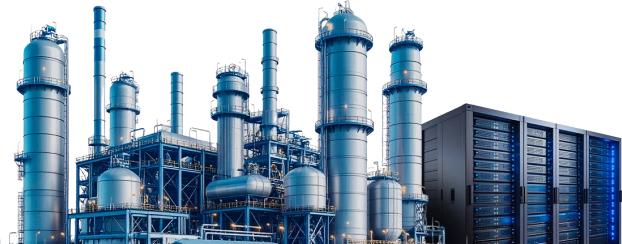
Gray Oak Power enables hyperscalers to bypass this AI power dilemma entirely through dedicated, on-site primary power generation.
Gray Oak Power is an infrastructure partner, not a data center developer. We design, build, and operate power plants — not campuses. This shared-risk, joint development model means we work alongside developers, hyperscalers, and EPCs from project inception through commercial operation, without competing for our partners’ core business. Our role is to equip your project with dedicated, reliable power — so you can focus on what you do best.
Gray Oak Power provides the execution capability to turn the “AI Power Dilemma” into a strategic advantage for developers and the American economy.
To meet aggressive deployment timelines, many operators are pairing grid interconnection plans with on-site generation that can deliver immediate capacity. This dual-track approach allows projects to move forward while funding the energy infrastructure needed for new workloads.
In many regions, the timeline for new transmission lines, substations, and interconnection approvals can stretch several years. To keep projects on schedule, developers are increasingly deploying on-site firm power that can support operations while permanent grid infrastructure is built.
Experienced power providers, like Gray Oak Power, can design and deploy modular generation systems that deliver reliable capacity from day one and integrate with the facility’s long-term energy plan. Once grid power becomes available, these systems can be repurposed to support backup, resiliency, or peak demand.
Beyond providing immediate firm power, on-site generation offers operators greater control over their energy strategy. Facilities can maintain uptime during grid outages, participate in demand response programs, or optimize energy use for cost efficiency.
By integrating on-site generation with future grid interconnections, developers can create a hybrid system that adapts to changing workloads, supports sustainability goals, and ensures continuous operations, even in regions with constrained or aging grid infrastructure.